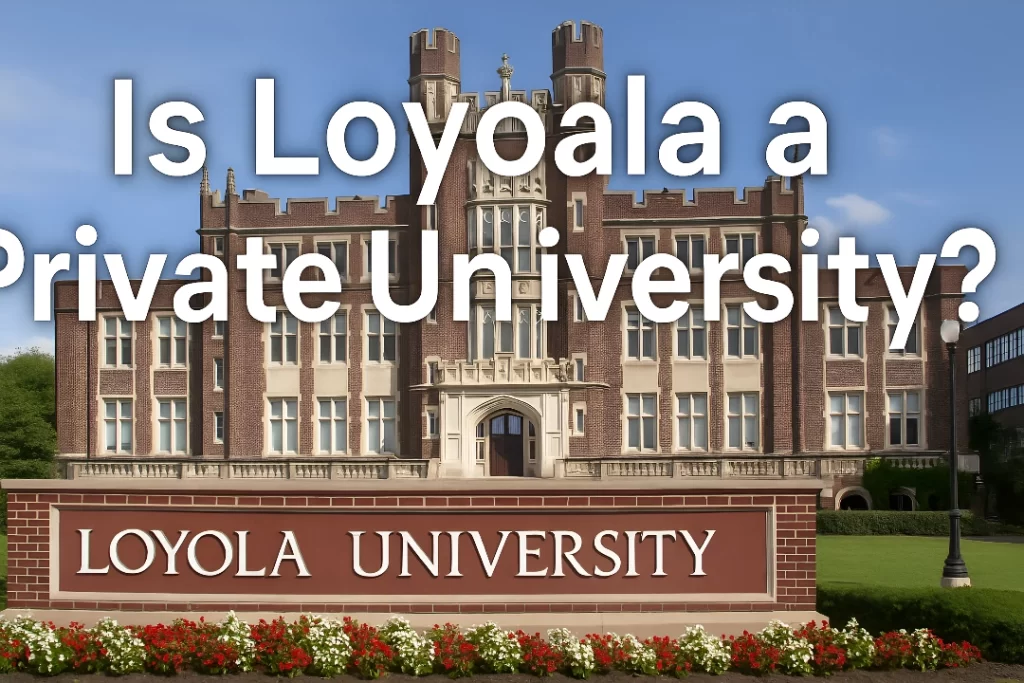
Choosing a college means more than just selecting a location—it involves understanding the type of institution, its mission, funding model, and how those elements shape your academic journey.
Many prospective students ask: Is Loyola a private university? The answer is yes. But there’s much more to unpack. In this post, we’ll explain:
- The difference between public and private universities
- What makes Loyola a private institution
- How Loyola’s private status impacts academics, student life, and your overall college experience
Public vs. Private Universities Differences
Before answering “Is Loyola a private university?”, it’s important to understand the two primary types of colleges:
Public Universities
- Funded primarily by state governments
- Tend to have larger student populations
- Lower tuition for in-state residents
- Often emphasize research and public service
Private Universities
- Funded through tuition, private donations, and endowments
- Have more control over curricula and governance
- Typically offer smaller class sizes
- Focus on personalized education and niche programs
So, Is Loyola a Private University?
Yes, Loyola is a private university. Specifically, Loyola is a Jesuit Catholic institution, founded by the Society of Jesus—a Catholic religious order—over 150 years ago.
Loyola’s Private Status: What It Means
- Independently governed by its own Board of Trustees
- Financed through tuition and private contributions, not state funds
- Embodies Jesuit educational principles, focused on social justice, ethics, and intellectual rigor
Loyola University operates multiple campuses in the U.S., including:
- Loyola University Chicago
- Loyola University New Orleans
- Loyola Marymount University (Los Angeles)
All are private, nonprofit institutions guided by Catholic values.
A Brief History of Loyola University
Founded in 1870, Loyola University Chicago began its journey with a mission centered on:
- Holistic education
- Faith-based learning
- Commitment to social responsibility
Unlike public universities, Loyola’s private status has allowed it to remain aligned with its founding religious mission, adapting over time while staying rooted in Jesuit traditions.
Benefits of Loyola Being a Private University
1. Academic Autonomy
Loyola has the freedom to design its own curriculum, independent of state regulations. This allows for:
- Faster integration of new subjects (e.g., AI, environmental ethics)
- Focused interdisciplinary programs
- Faith-integrated learning experiences
2. Smaller Class Sizes
One hallmark of private institutions like Loyola is a more intimate academic setting. This means:
- More one-on-one attention
- Closer student-faculty relationships
- Higher engagement in classroom discussion
3. Robust Campus Resources
Thanks to private funding and alumni support, Loyola invests heavily in:
- Cutting-edge technology
- State-of-the-art labs and libraries
- Study abroad and service-learning programs
How Private Funding Shapes Loyola’s Campus
Tuition and Costs
As a private university, Loyola typically charges higher tuition than state-funded schools. However, this revenue directly supports:
- Academic innovation
- World-class facilities
- Student services and extracurricular programs
Financial Aid and Scholarships
Despite higher tuition, Loyola is known for offering:
- Generous financial aid packages
- Merit-based scholarships
- Jesuit-endorsed grants for service-based leadership and mission alignment
Academic Offerings and Signature Programs at Loyola
Thanks to its private status, Loyola offers specialized programs not always available in public institutions. These include:
| Program Type | Examples |
|---|---|
| Pre-Professional Programs | Pre-Law, Pre-Med, Pre-Dentistry |
| Jesuit Mission-Centered Programs | Peace and Justice Studies, Theology, Ethics |
| Interdisciplinary Studies | Environmental Science + Policy, Bioethics, Global Studies |
| Graduate & Doctoral Programs | Law, Business, Nursing, Education, Social Work |
These programs are designed to cultivate both career readiness and moral leadership.
Student Experience at a Private Institution Like Loyola
Beyond the classroom, Loyola’s private nature supports a vibrant and value-driven student life.
| Feature | Description |
|---|---|
| Community Engagement | Jesuit institutions emphasize community service, volunteerism, and civic duty |
| Diverse Student Body | Students from all backgrounds come together to learn and grow |
| Campus Culture | Encourages inclusivity, leadership, and spiritual growth |
Students enjoy:
- Over 250 clubs and organizations
- Study abroad in 20+ countries
- Leadership development and mission-driven internships
Private vs. Public: Which One Is Right for You?
| Factor | Private (Loyola) | Public Universities |
|---|---|---|
| Funding Source | Tuition, donations, endowments | State and federal government |
| Class Size | Small, personalized | Large, lecture-based |
| Tuition Cost | Higher (but offset by financial aid) | Lower for in-state students |
| Curriculum Control | Autonomous; faith-based options available | Regulated by state education boards |
| Campus Culture | Mission-driven, tight-knit | More diverse, less structured in terms of values |
The Jesuit Difference: What Sets Loyola Apart
As a Jesuit Catholic university, Loyola stands out in the private university landscape. It’s not just about academics—it’s about character, conscience, and community.
Loyola’s Jesuit Pillars Include:
- Cura Personalis (care for the whole person)
- Service to others
- Reflection and discernment
- Ethical leadership
This foundation helps students become men and women for others—the Jesuit ideal.
FAQ: Is Loyola a Private University?
1. Is Loyola University private or public?
Loyola University is a private, nonprofit Jesuit institution.
2. Is Loyola part of a religious organization?
Yes, Loyola was founded by the Society of Jesus (Jesuits) and maintains a Catholic mission.
3. Why is Loyola considered private?
It receives no state funding and is governed independently, relying on tuition and donations.
4. Is Loyola more expensive than public colleges?
Tuition is generally higher, but Loyola offers strong financial aid and scholarships.
5. Does being private affect class sizes?
Yes. Loyola has smaller, more interactive classes compared to many public universities.
6. Can non-Catholic students attend Loyola?
Absolutely. Loyola welcomes students of all faiths and backgrounds.
7. Does Loyola follow government curriculum rules?
No. As a private institution, it designs its own academic programs and policies.
8. Does Loyola receive federal student aid funding?
Yes. While not funded by the state, it does accept FAFSA and federal grants/loans.
9. Is Loyola affiliated with other Jesuit schools?
Yes. It is part of a network of over 200 Jesuit institutions globally.
10. Which Loyola campus is the most well-known?
Loyola University Chicago is the largest and most recognized internationally.
11. What kind of degrees does Loyola offer?
Bachelor’s, Master’s, Doctorate, and professional degrees across numerous fields.
12. Does private status mean better education?
Not always, but private schools like Loyola offer more personalized learning and faith-centered values.
13. Is Loyola regionally accredited?
Yes. Loyola holds regional accreditation, ensuring academic quality and degree recognition.
14. Are donations important to Loyola?
Very. Alumni donations and endowments fund scholarships, research, and facilities.
15. Is Loyola’s private model sustainable?
Yes. Its long history, strong mission, and global Jesuit network support continued success.
Conclusion
To summarize: Yes, Loyola is a private university—and that status comes with a rich legacy, strong values, and a student-first academic model.
From its Jesuit roots to its personalized education and mission-driven community, Loyola stands out as a leader in private higher education.
Whether you’re considering Loyola for its academic excellence, spiritual formation, or community service opportunities, knowing that it’s a private institution helps you make an informed choice that aligns with your goals.